
Cloud Computing: HR’s New Foundation

Cloud computing has moved from being a “nice-to-have” to an essential part of HR infrastructure, acting as the central hub for data storage, tools, and applications. Its appeal lies in its flexibility, allowing HR teams to access resources from anywhere and scale operations without hefty investments in hardware. With more HR teams embracing remote or hybrid models, the cloud’s role in HR has become indispensable, reshaping how companies manage employee data, streamline workflows, and leverage analytics. Here are a few of the top advancements driving this shift:
Hybrid Cloud: Balancing Security and Innovation
In the hybrid cloud model, companies are finding the perfect balance between data security and operational flexibility. A hybrid setup blends private and public cloud services, allowing HR teams to store sensitive employee information in a secure private cloud while using public cloud resources for less sensitive operations and applications. For example, payroll and benefits information might be kept private, while analytics dashboards and productivity tools run on the public cloud, enhancing speed and access.
Hybrid cloud models also allow HR teams to meet regional data protection laws, ensuring compliance while giving employees in various locations easy access to necessary HR tools. This setup is perfect for large enterprises with a global workforce, as it provides seamless service to employees while keeping sensitive information protected.
AI-Powered Analytics: Turning Data into Strategy
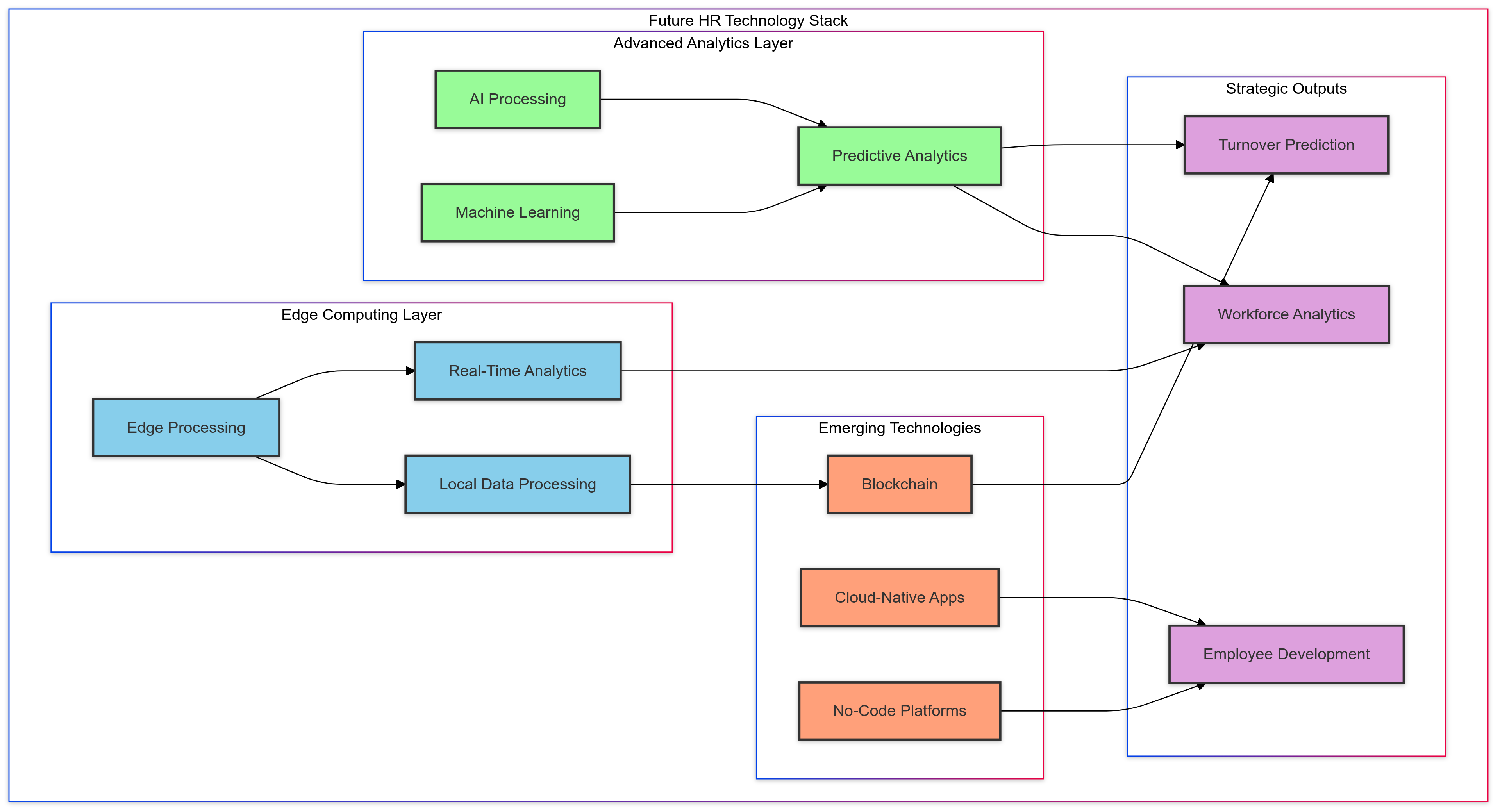
AI has transformed cloud-based HR systems into powerful analytical tools, providing HR professionals with deeper insights into the workforce than ever before. With AI-powered analytics, HR teams can track, analyze, and predict trends such as employee turnover, productivity, and engagement in real time. The capability to analyze historical data and identify trends helps companies make proactive decisions—whether that means restructuring teams, optimizing recruitment, or targeting specific areas for employee development.
For instance, AI can flag employees at high risk of turnover, allowing managers to address underlying issues before they result in a resignation. By providing insights on workforce sentiment, AI-powered analytics also allows companies to tailor employee engagement initiatives based on what will have the most impact.
Edge Computing: Real-Time Data Processing and Privacy
Edge computing brings data processing closer to its source rather than relying on a central data center, making it invaluable for companies with distributed teams or multiple locations. This approach reduces latency, enabling real-time data processing that’s critical for tasks like scheduling, payroll processing, and attendance tracking, especially in fast-paced industries like retail or hospitality.
Edge computing also enhances privacy by allowing data to be processed locally instead of being sent across networks to a central location. For example, companies can manage sensitive employee data directly within the office or region it originates from, adding a layer of security and improving data privacy. This structure is particularly useful in remote or field-based environments, where HR teams must process real-time data to ensure accurate, up-to-date employee records.
The Future of Cloud Computing in HR: Innovation and Adaptability
Looking ahead, the cloud is set to bring even more innovations to HR, with more sophisticated integrations and customizable workflows tailored to each organization’s needs. As more companies realize the cloud’s potential, the demand for cloud-native applications—those built specifically to operate in cloud environments—is expected to grow. These tools are flexible, allowing HR teams to design workflows and create customized reports without complex coding or IT support, empowering HR to take a more strategic role in company operations.
In addition, the potential for cloud platforms to integrate emerging technologies like blockchain and advanced AI will further enhance security, transparency, and decision-making capabilities in HR, creating a robust, future-ready HR foundation.
The post Cloud Computing: HR’s New Foundation first appeared on MetaHRM.org.